Text-based Storyboard — Train the AI, Check the AI
Kit 4 · Train the AI, Check the AI · deliverable · designed and built by I Wayan Usada · fictional composite (Nordwind Software and its customer are invented)
Design premise
Consequence before instruction: a fluent AI draft is confident and subtly wrong, and the habit is a four-rung check at the moment of send. Revised after the build so it describes what ships (one 3D lesson, 01-lesson-interactive.html; the separate 3D page is retired and redirects here).
Scene plan
| # | Scene | On screen | The learner does | Feedback |
|---|---|---|---|---|
| A | The confident draft | AI reply to a billing complaint, drafted in 4 seconds | reads it | “confidence is not correctness” |
| B | Hotspot hunt | the same draft with 5 marked passages, 3 real risks and 2 safe lines | opens passages (click, or Tab and Enter) | each real risk is marked up on the draft on screen, with why; safe lines say why they are fine; the ladder unlocks after all 3 risks |
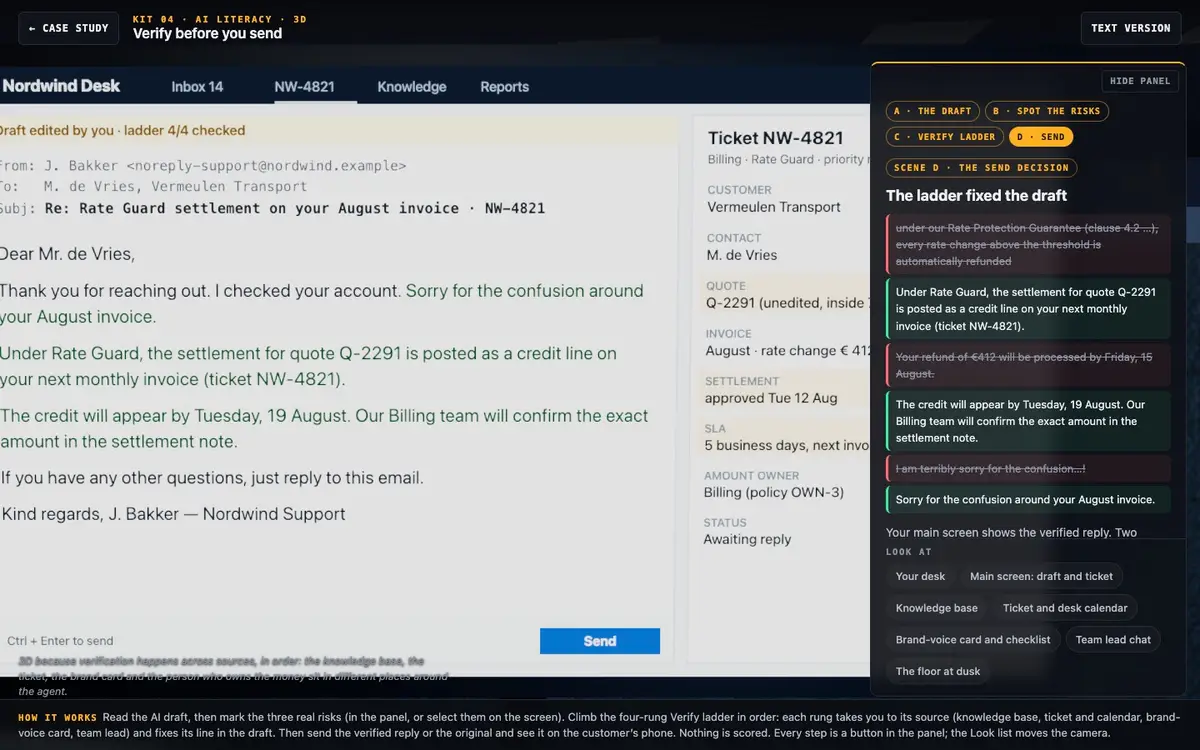
| C | The Verify ladder | one rung at a time; options shuffled per visit | picks the fix for each rung | wrong picks explain the failure and stay on the rung; each rung takes you to its source on the desk, fixes its line in the on-screen draft and ticks the checklist on the divider |
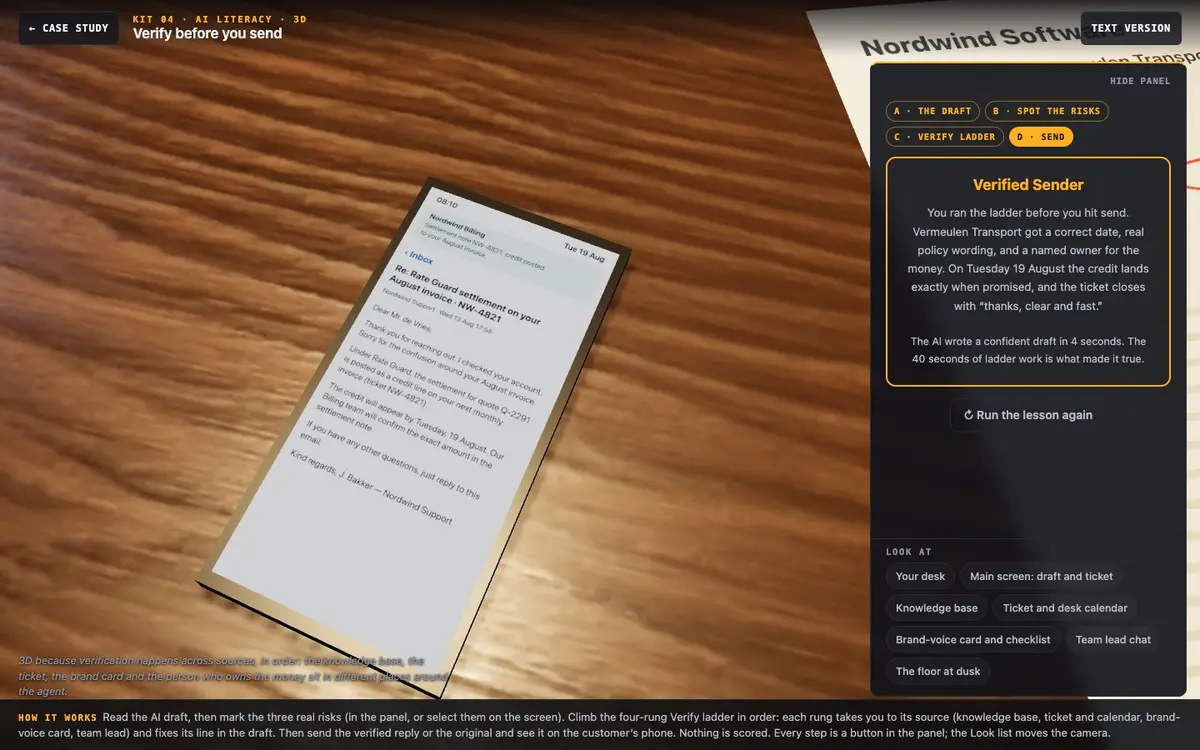
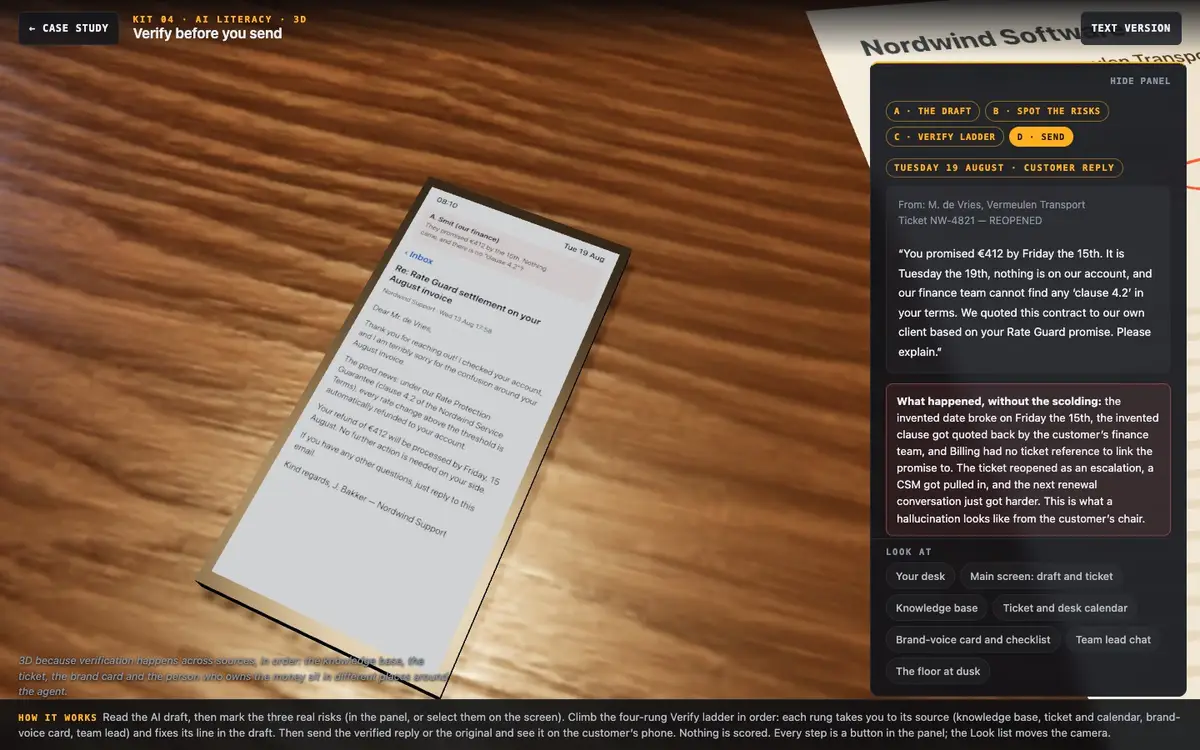
| D | The send decision | the corrected draft | sends the verified reply, or the original | the original replays the customer’s reopened ticket four days later |
The 3D workstation (v3)
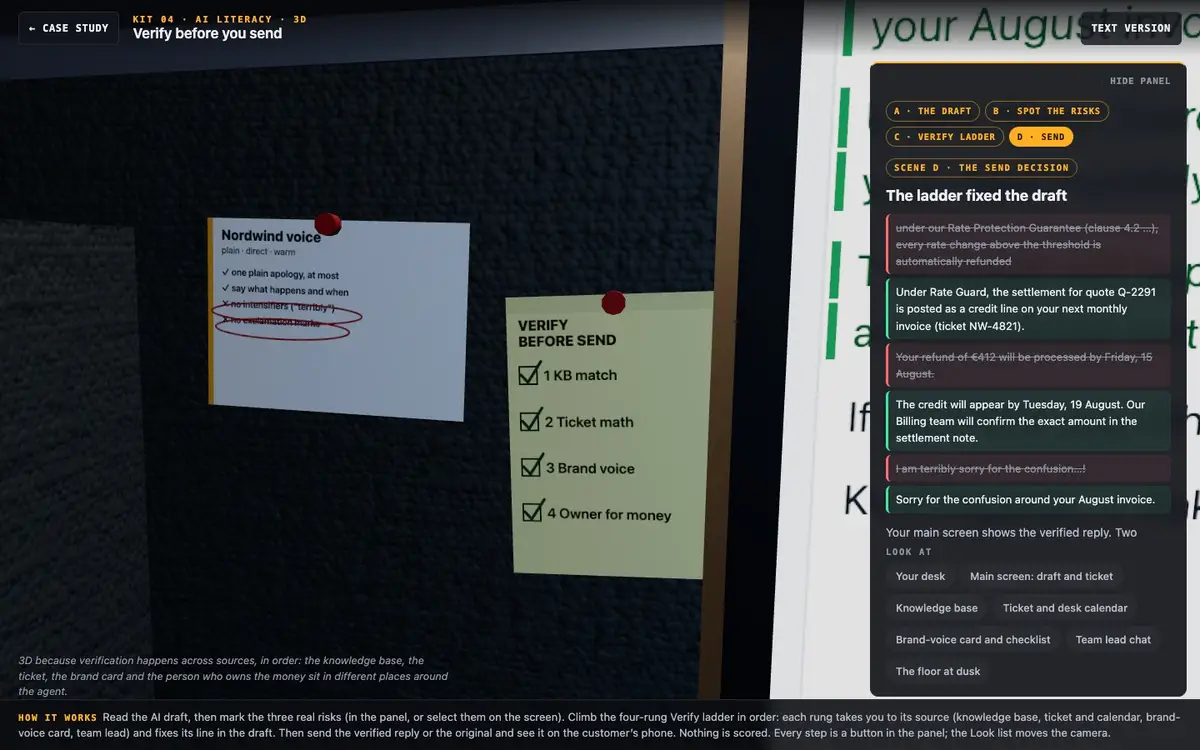
Wednesday 13 August, 17:52, end of a shift on Nordwind’s support floor; the city goes blue beyond rows of empty desks with locked screens. Seated view from the agent’s chair. The draft is in the reply composer on the main screen next to the ticket record; the second screen holds the knowledge base and the team chat; on the desk a desk-pad calendar for August, headset, mug and a desk lamp; pinned to the fabric divider the printed brand-voice card and a four-line verify checklist. The lamp swings onto the paper source of the current rung (calendar, voice card). After the send decision, one cut to the customer’s kitchen table: his phone shows the reply that was sent (and a message from his own finance team if it was the original). The lesson’s dates were made consistent for this build: written and sent on Wed 13 Aug, the original promised Fri 15 Aug, the real credit lands Tue 19 Aug. No sound; people stay off-screen.
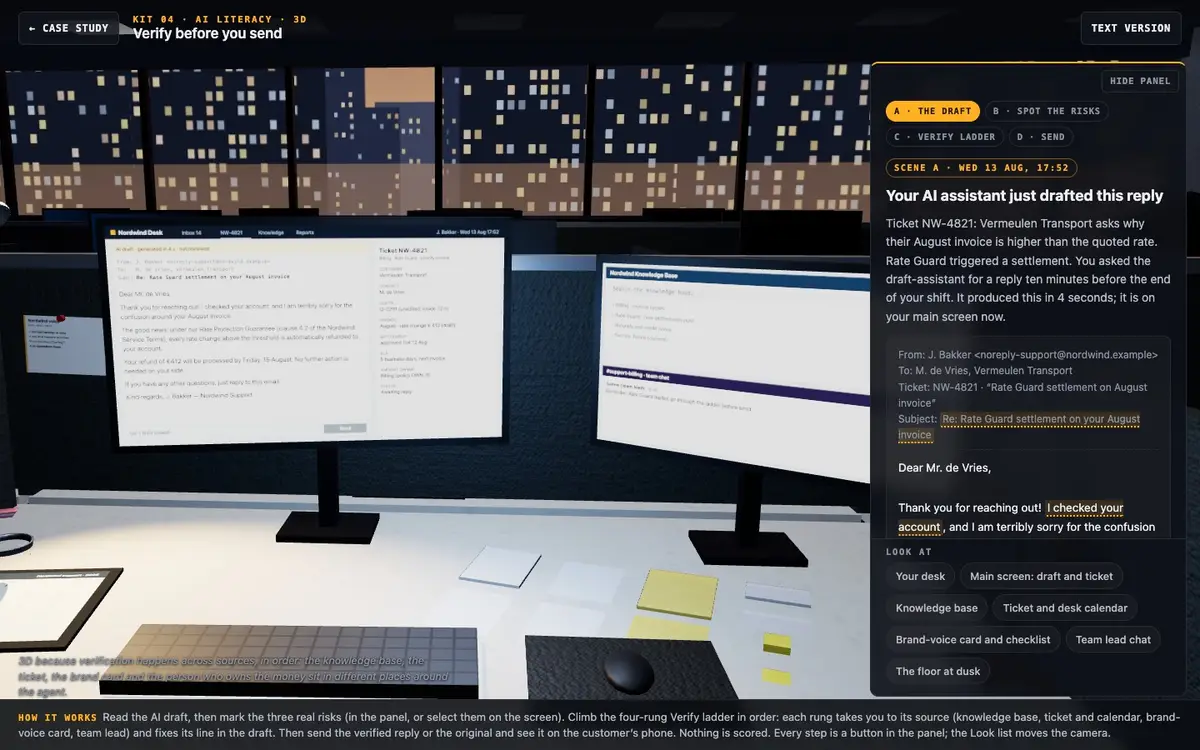
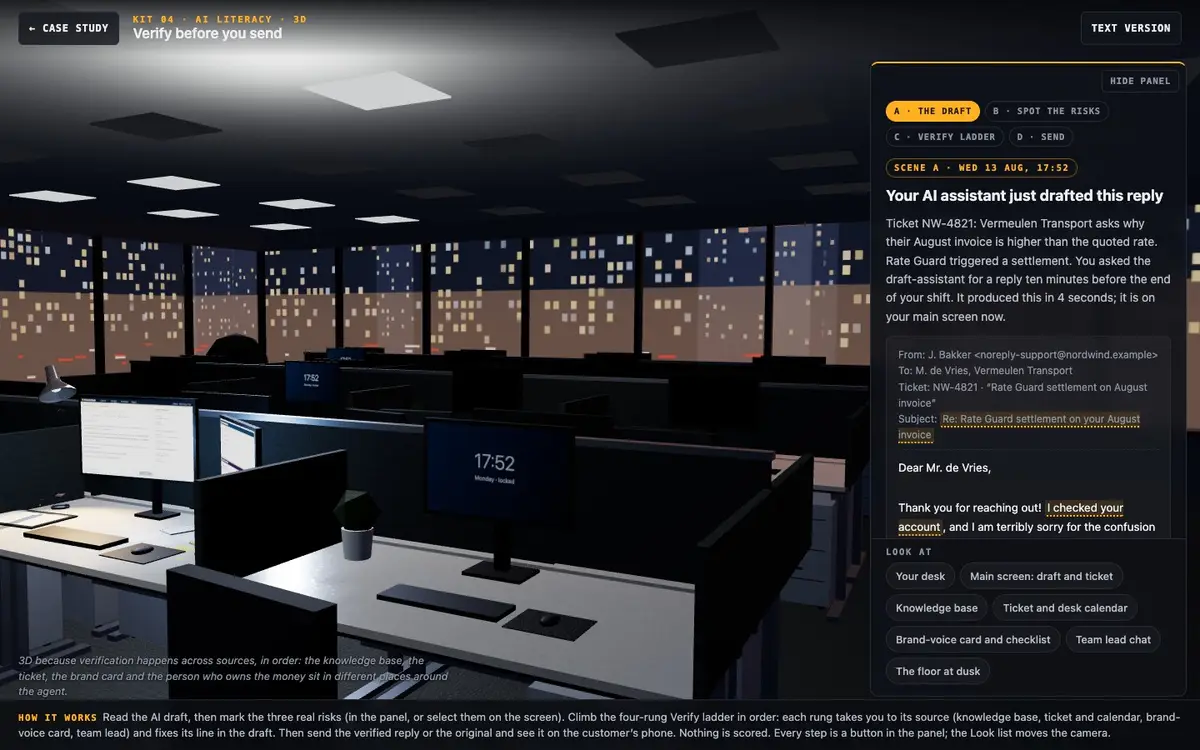
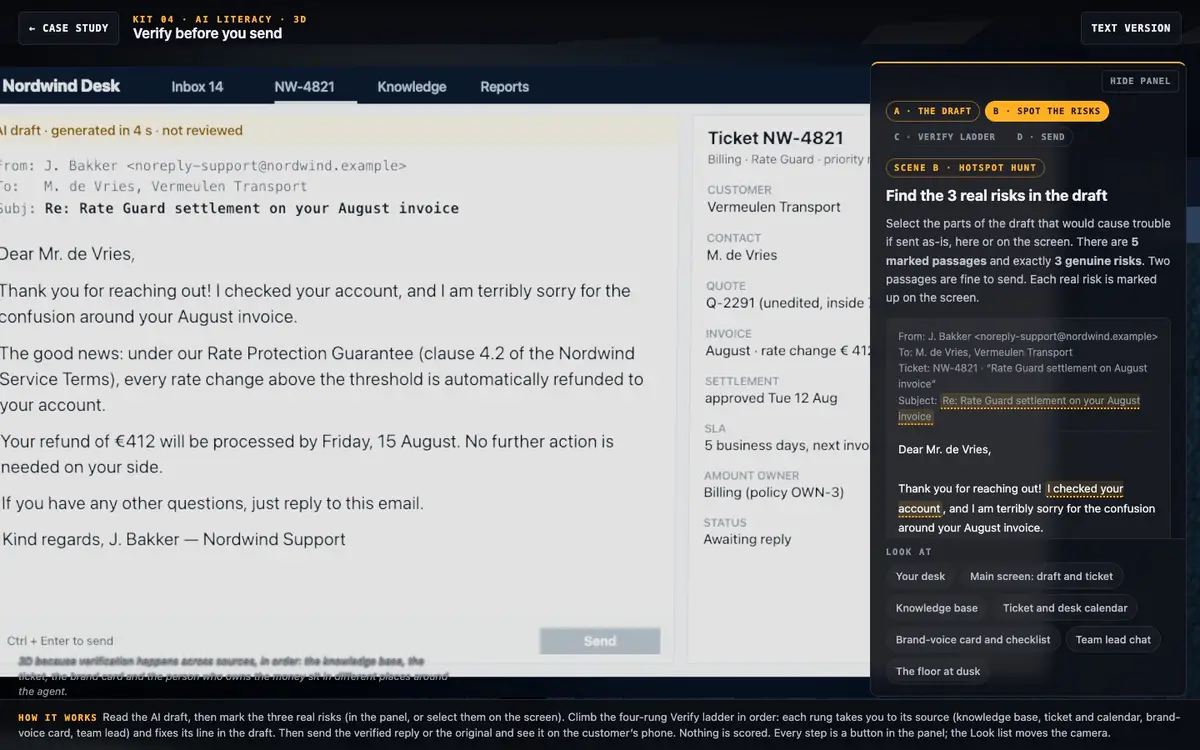
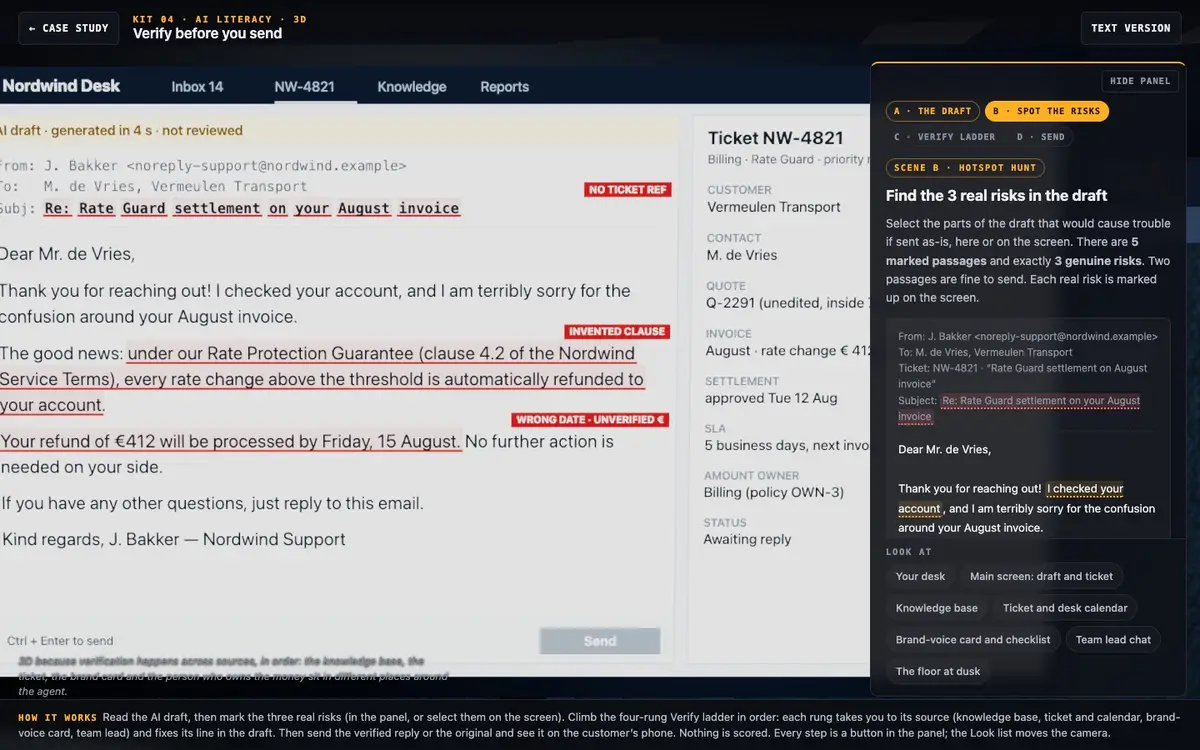
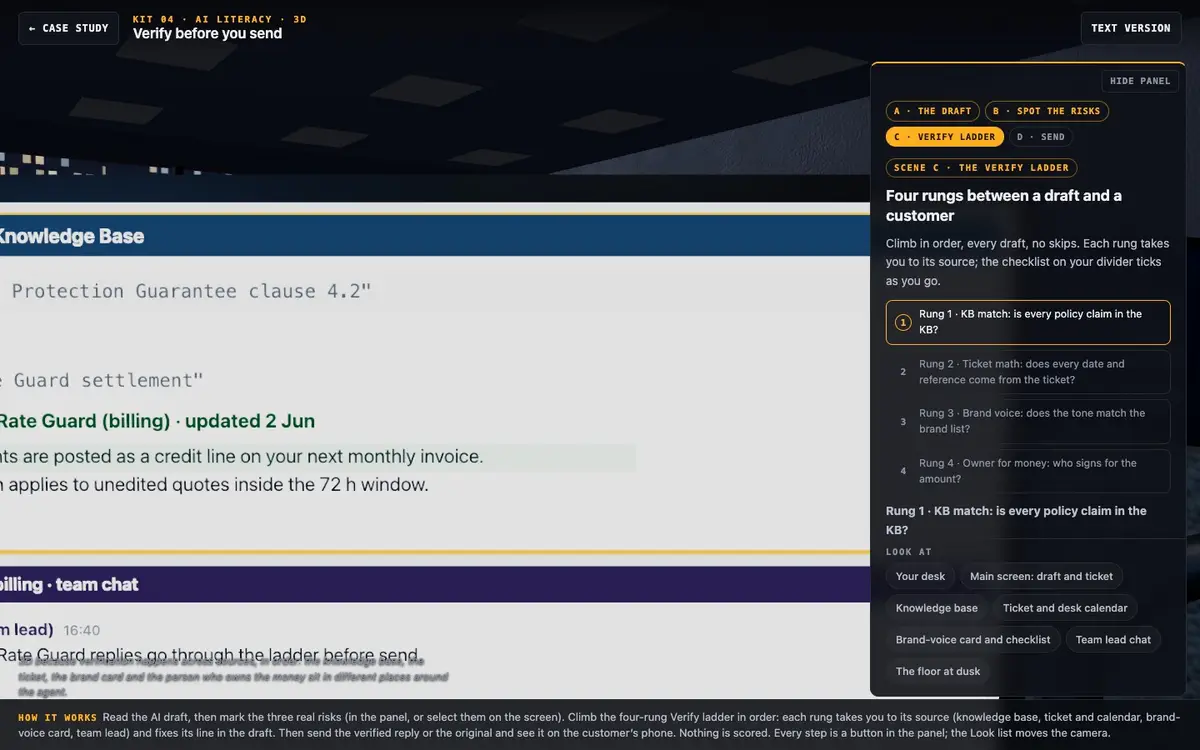
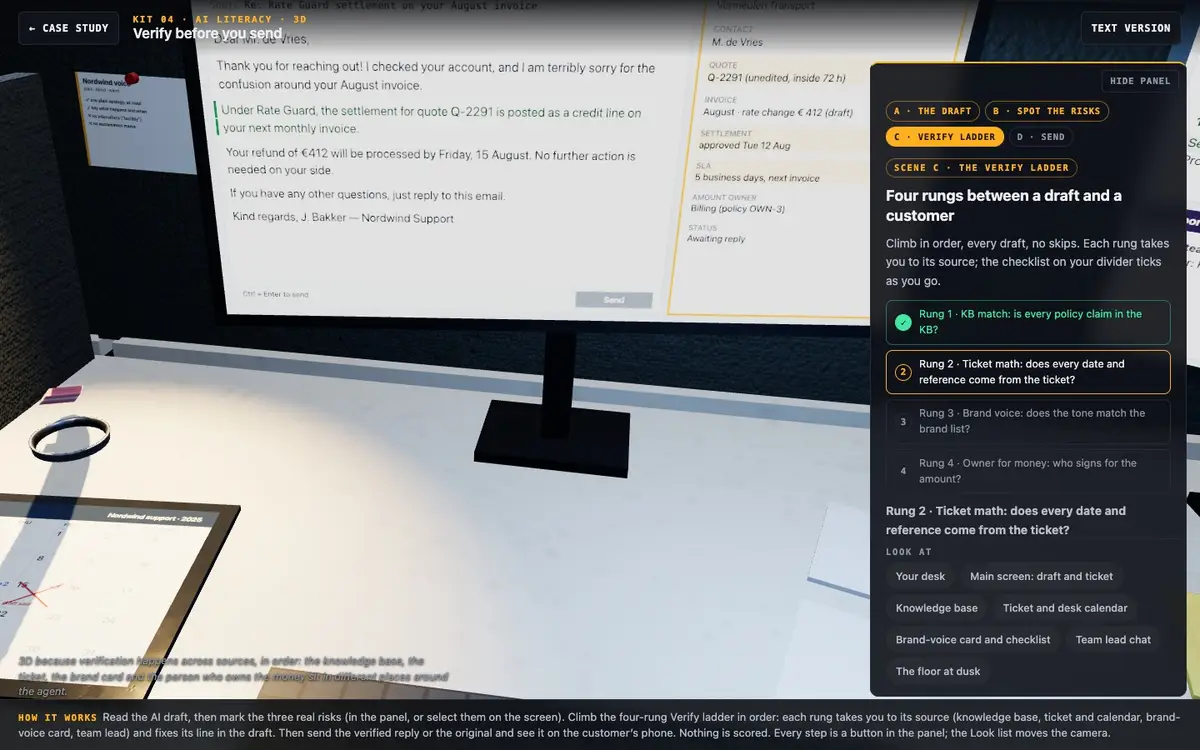
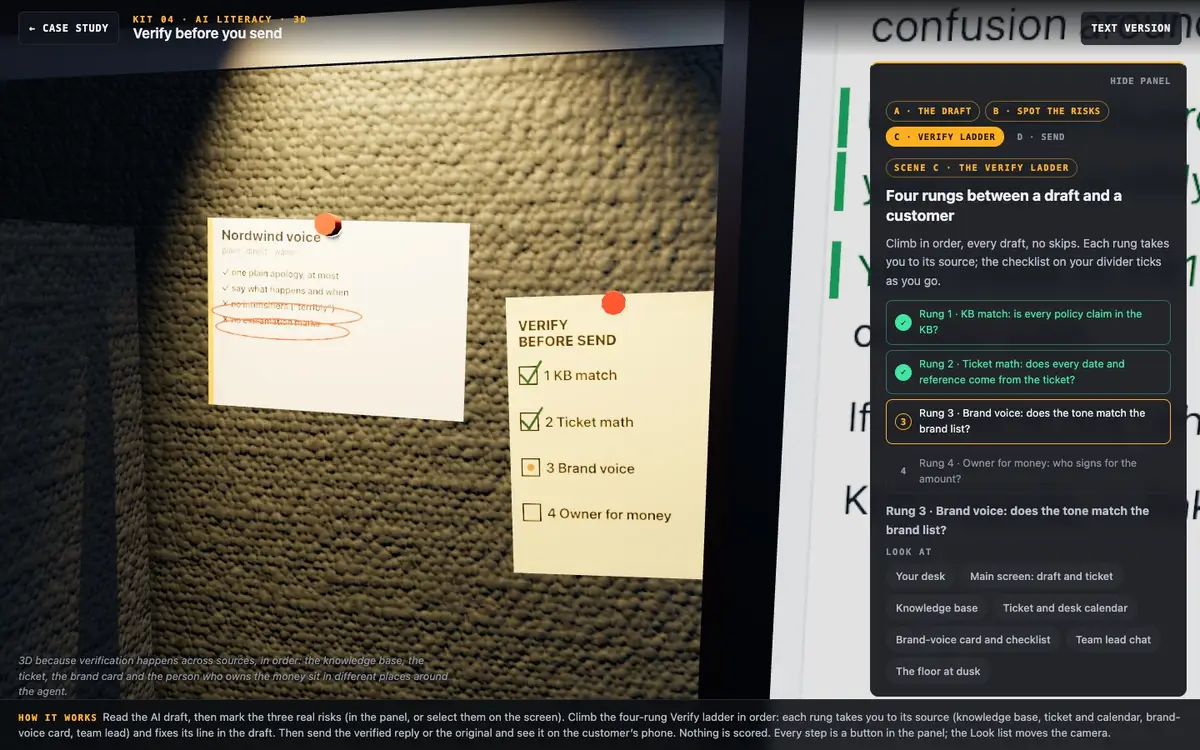
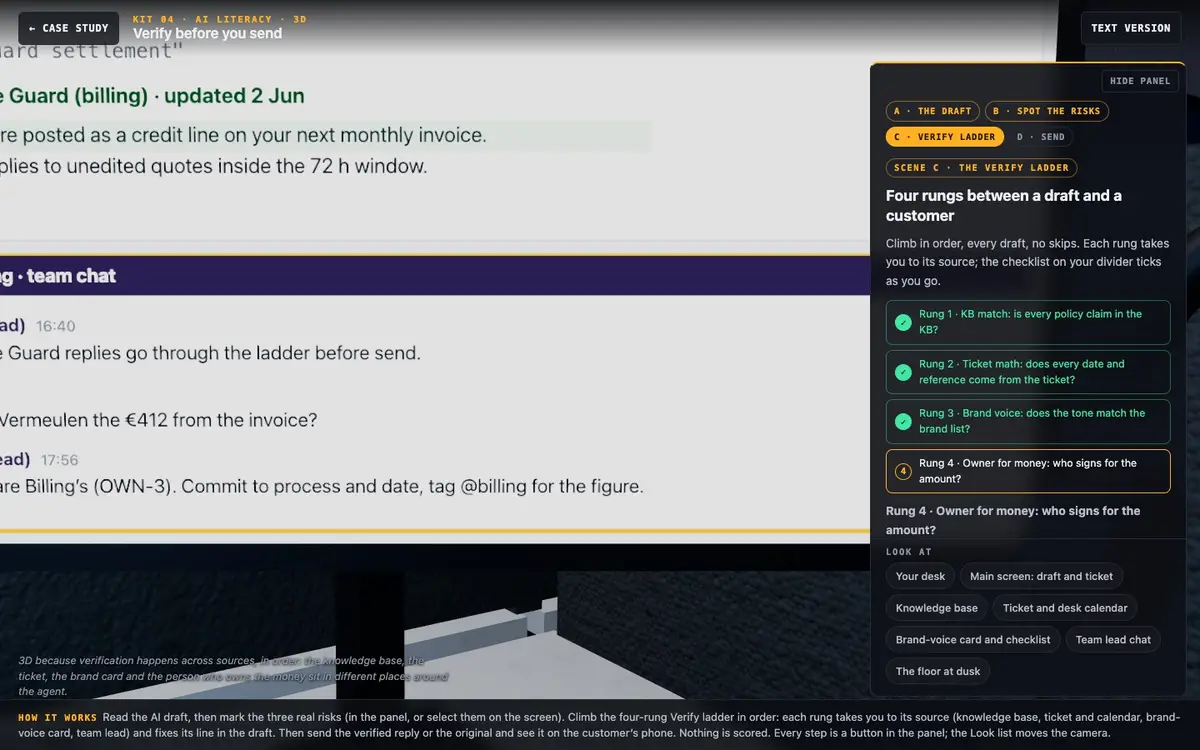
Text version. 01-lesson-text carries the same draft, risks, rungs and outcomes as text, generated from the lesson's content module, and is the 3D lesson's “Text version” link (also the fallback when WebGL is unavailable).
The four rungs (one set of names everywhere)
- KB match: every policy claim is in the knowledge base (catches the invented clause 4.2).
- Ticket math: every date and reference comes from the ticket (catches 15 Aug vs 19 Aug and the missing ticket ID).
- Brand voice: one plain apology, no intensifiers, no “!”.
- Owner for money: amounts are confirmed by Billing; Support commits to process only.
The earlier 3D module called the rungs “Run → Verify → Reflect → Send” and the action map “source, fact, tone, commitment”; both now use the guideline’s names.
What is not scored
Nothing in the lesson is scored; it is a practice run for a team huddle (see the facilitator note). The earlier storyboard promised hotspot scoring and over-flagging costs that were never built.
Prefer the source? Download the raw markdown.