Storyboard — Turbine 7
Kit 9 · Turbine 7 · deliverable · designed and built by I Wayan Usada · fictional case, illustrative figures · every frame below is a render from the shipped 3D build
Design premise
Every scene is a decision with a consequence, not a slide. The learner works one night shift from the operator's desk; the turbine, the string and the sea are where the evidence lives. The 2D simulator and the 3D scene read the same case file (scenarios.js), so the cases, scores and feedback are identical in both.
Shift structure
One shift = four alarm cases, one per pattern, drawn from a bank of eight (two per pattern) and dealt in a random order. Each case has four steps:
- Look. Open the part the alarm points to, or anything else: the other drivetrain parts, the met mast, the sister turbines. The call stays locked until the part holding the deciding evidence has been opened.
- Call. Restart, Restart derated, Hold for inspection, or Escalate to the shift lead. The consequence plays out on the machine.
- Pattern. "Which input decided this case?" Four options, shuffled, scored separately.
- Pushback. On rising-trend and recurrence cases, if the learner held or escalated, the production desk radios in; the learner picks a reply.
The shift ends with a handover note (LO3, formative) and the debrief.
Frames
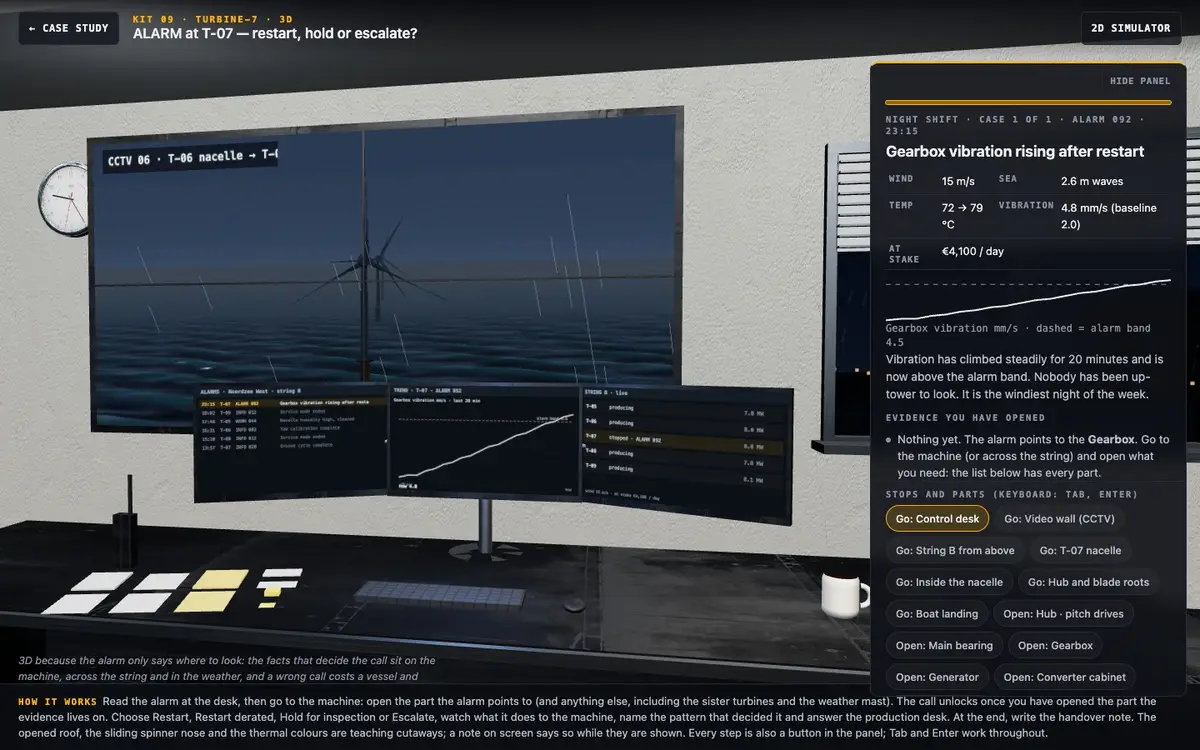
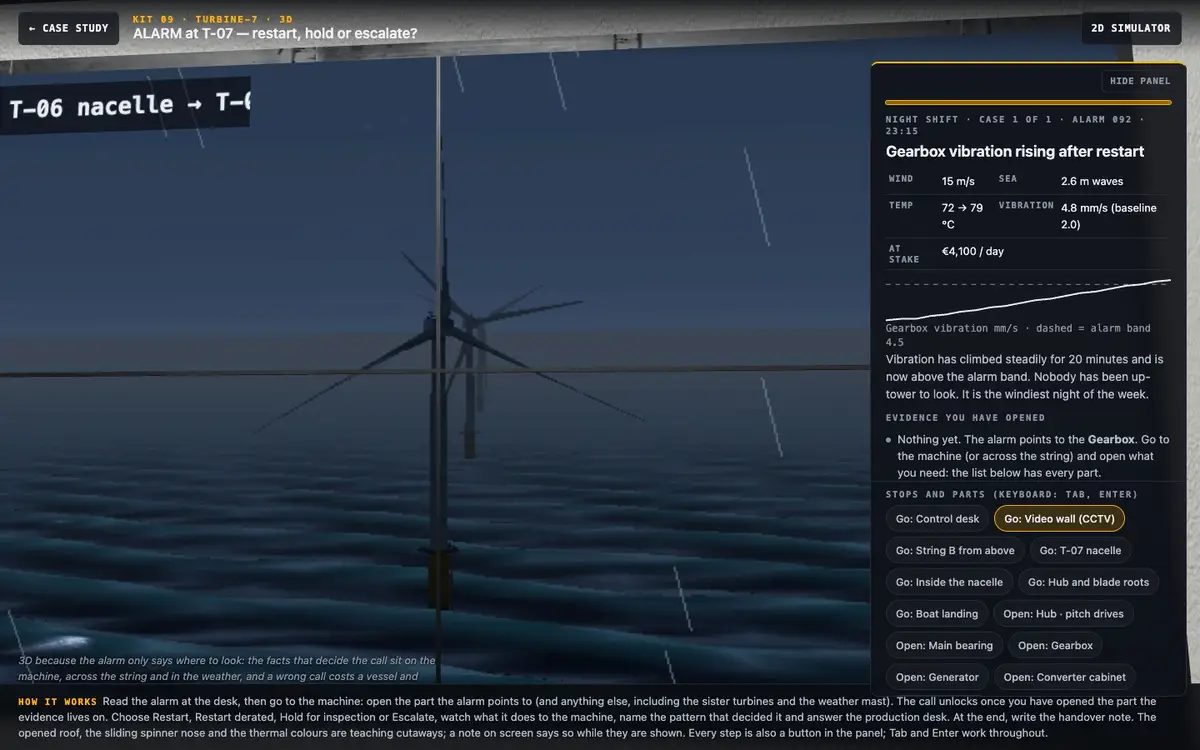
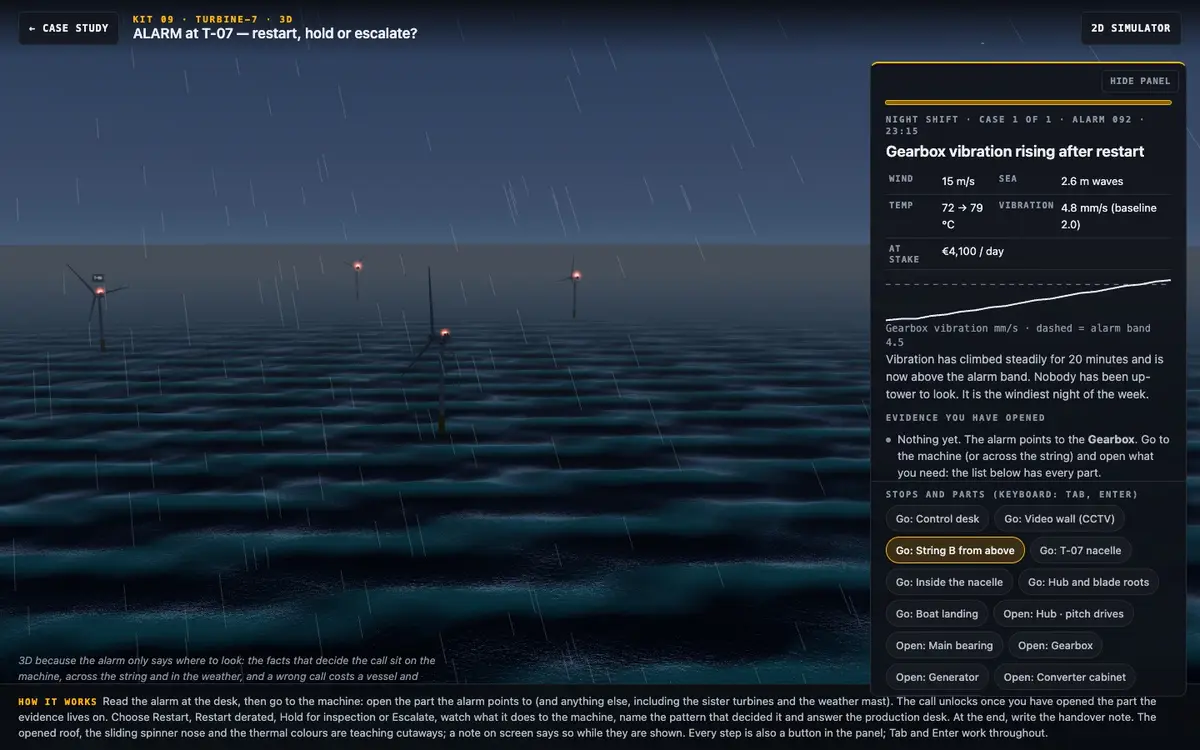
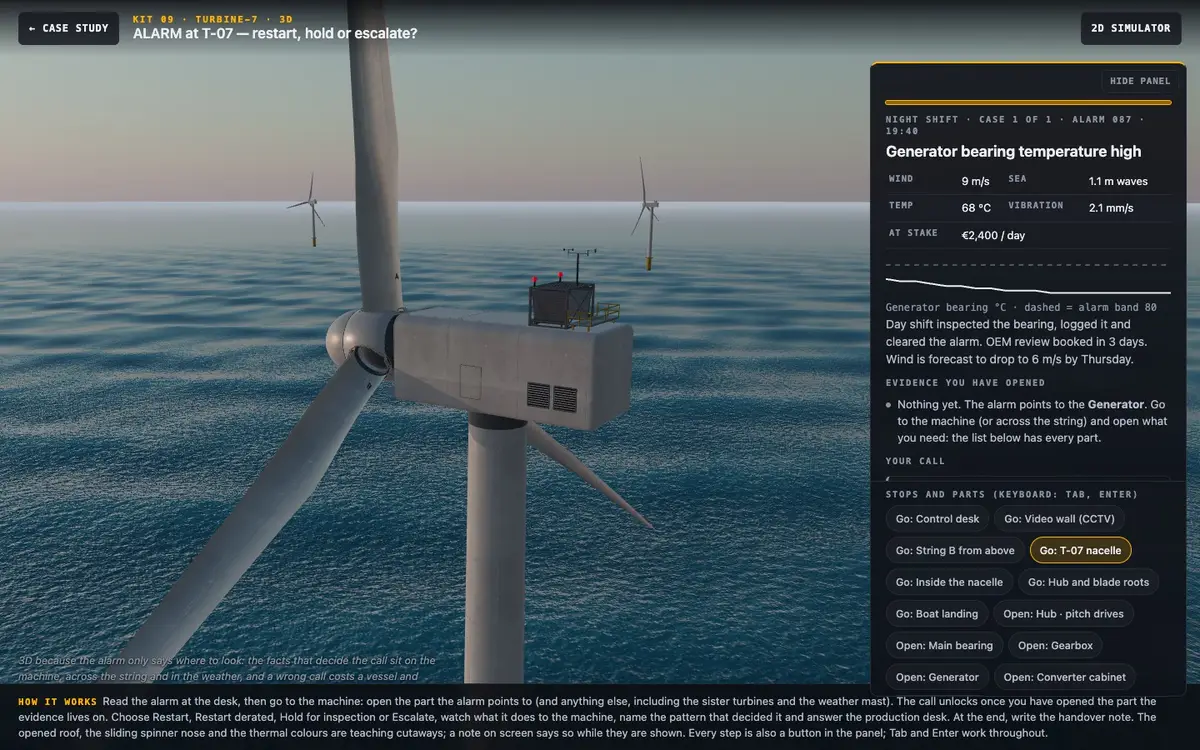
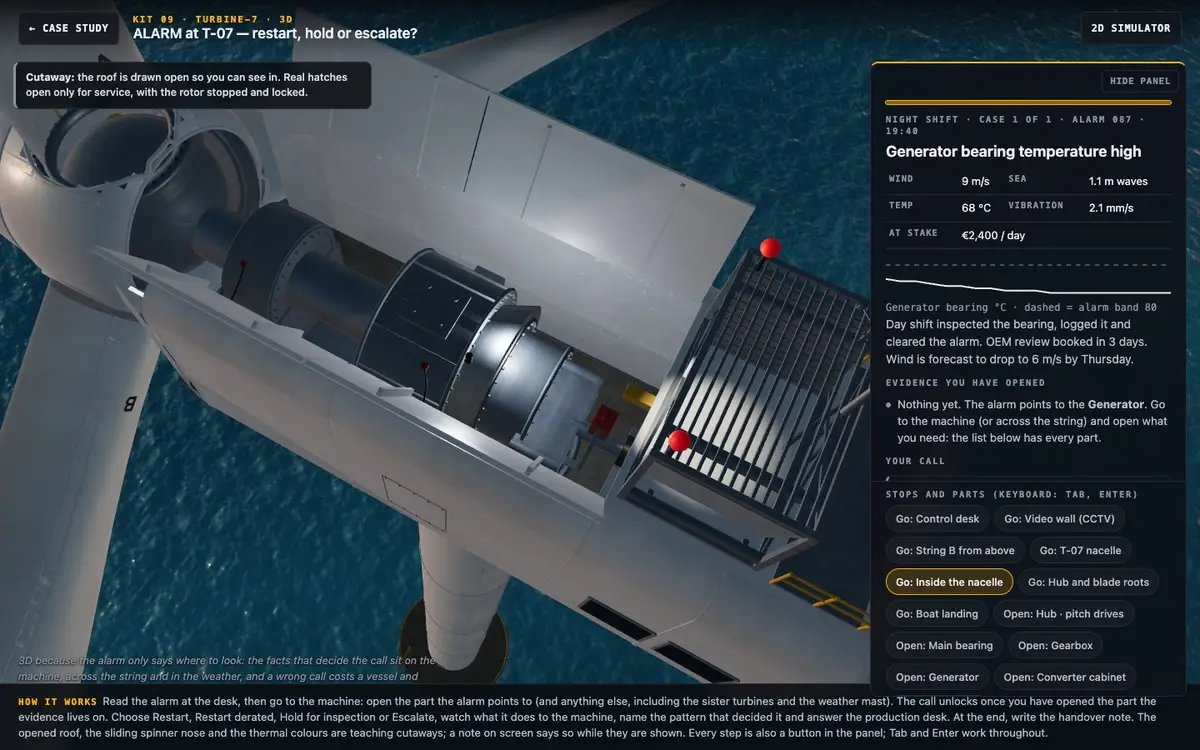
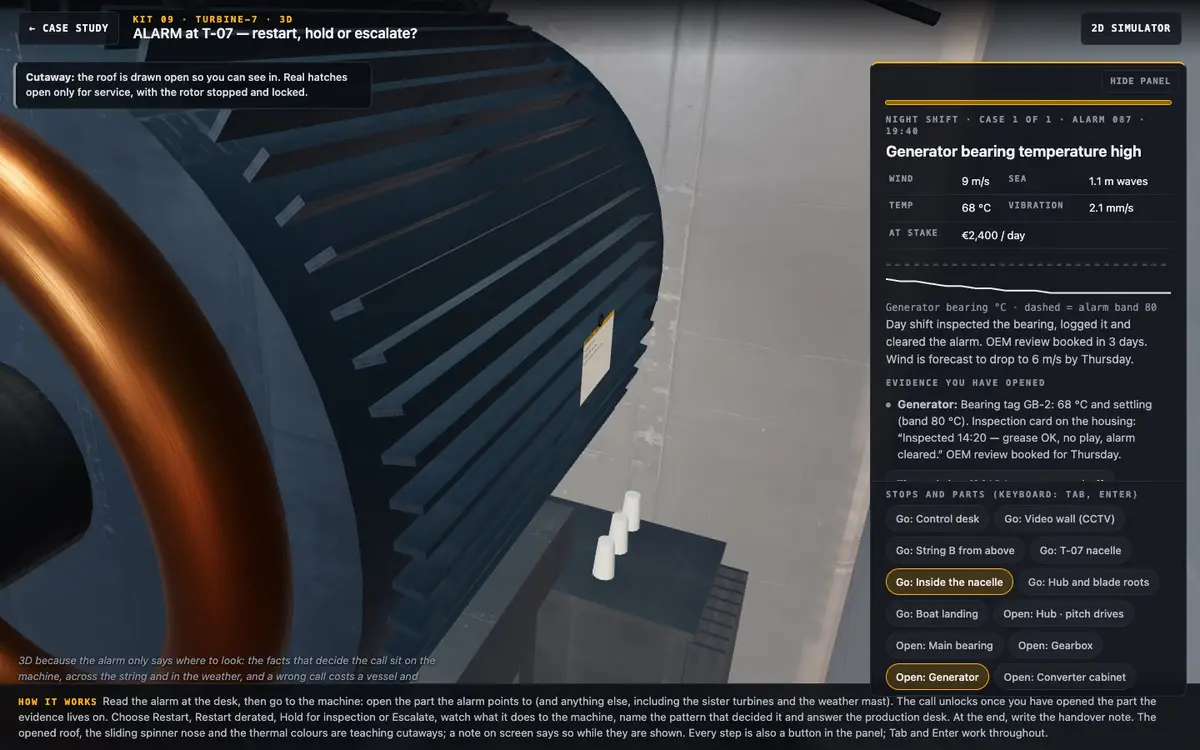
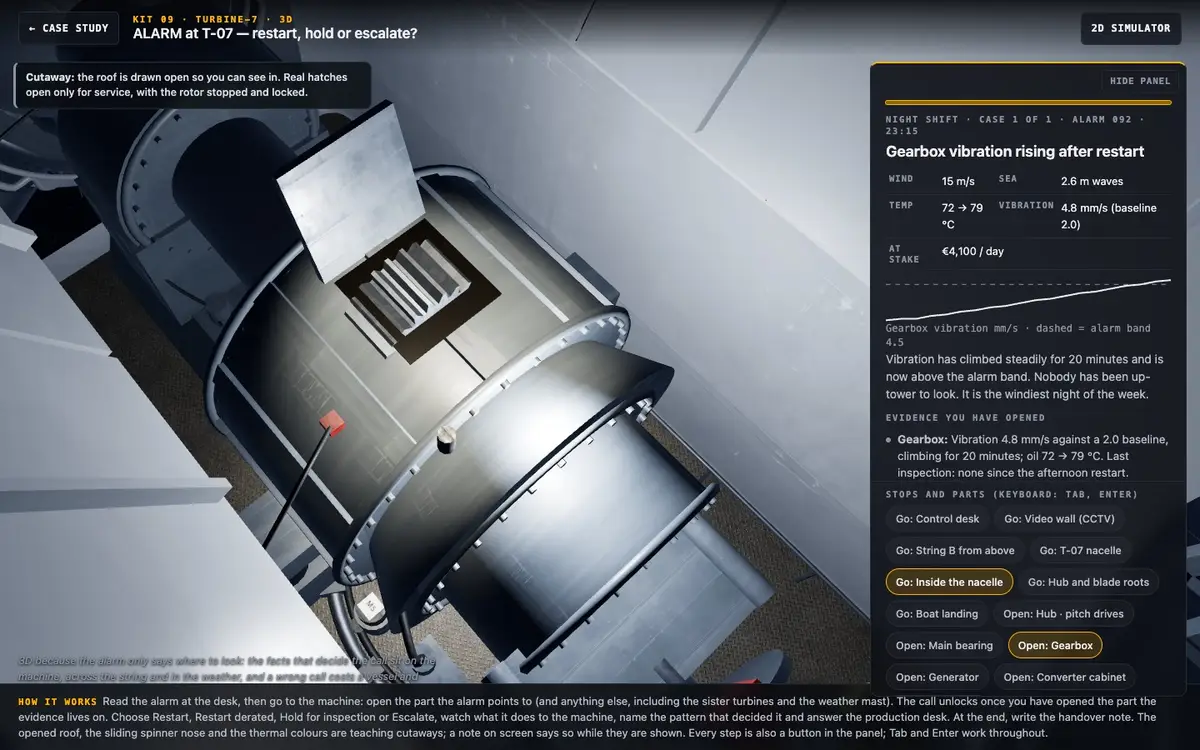
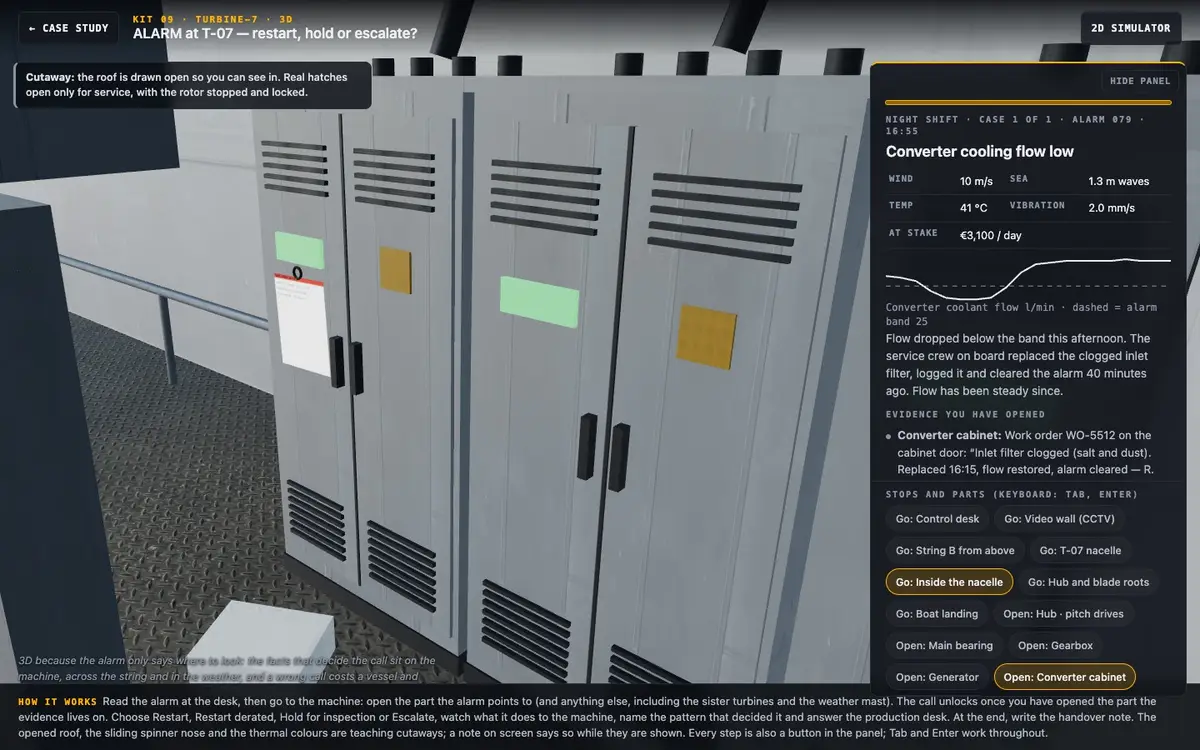
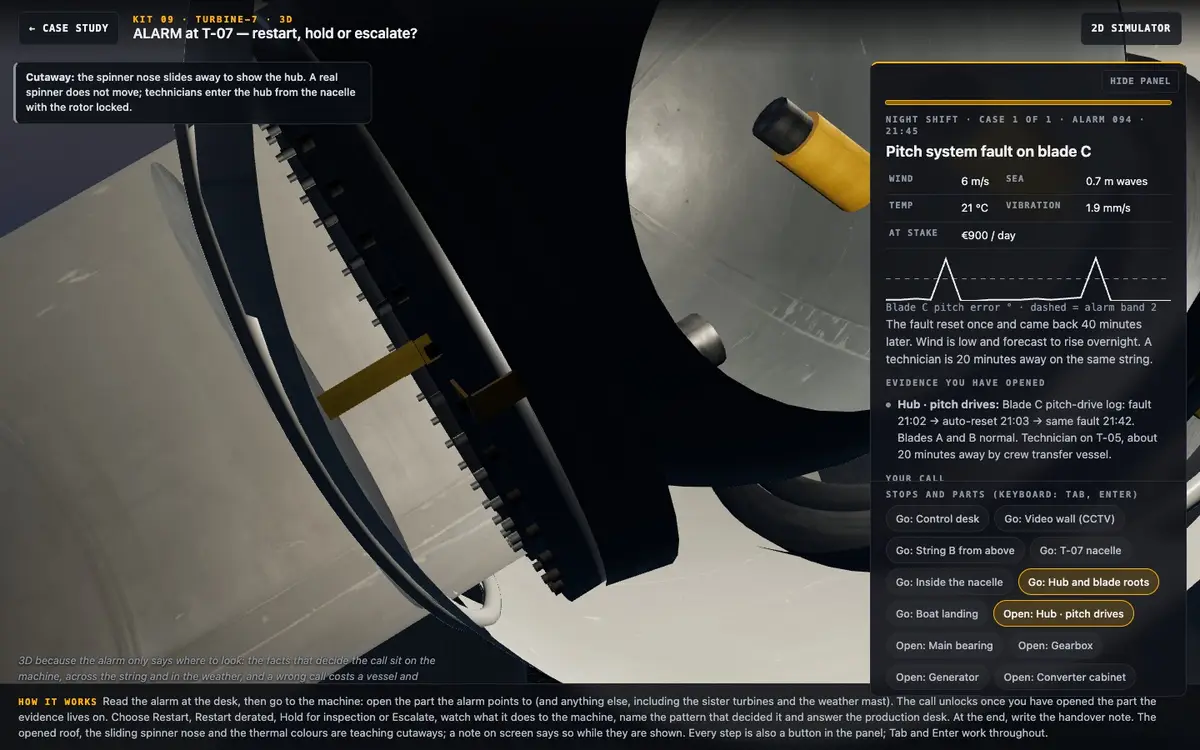
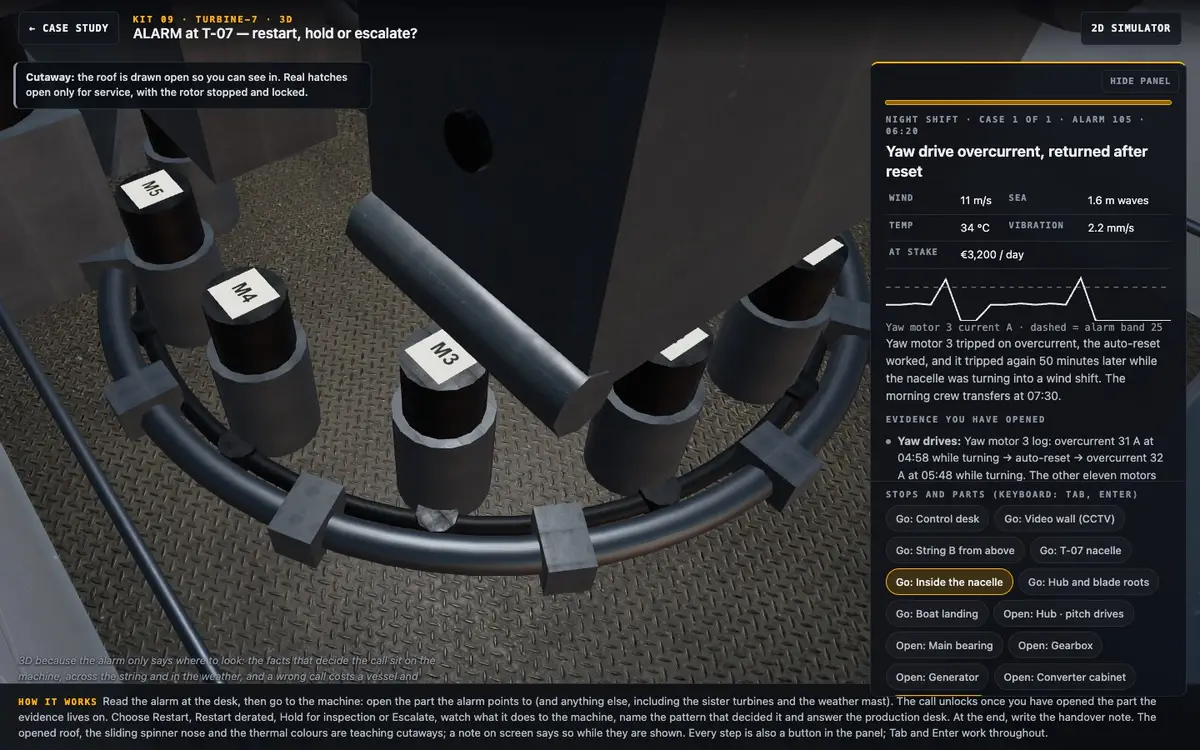
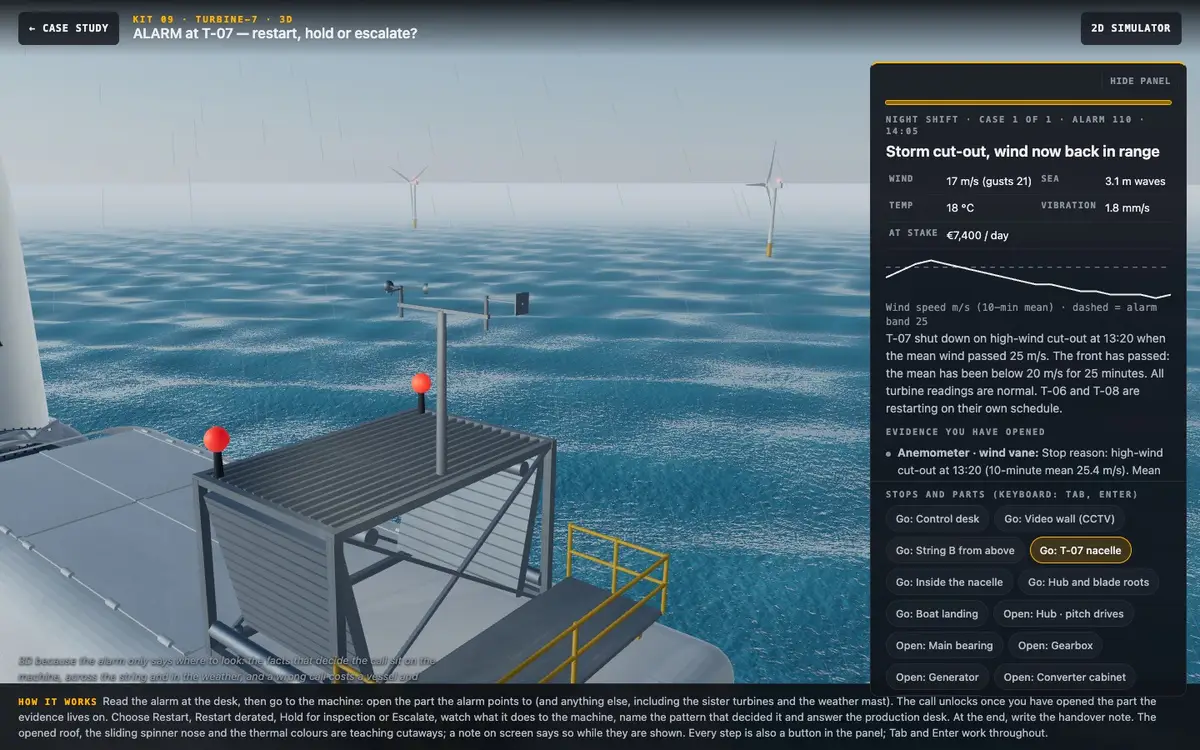
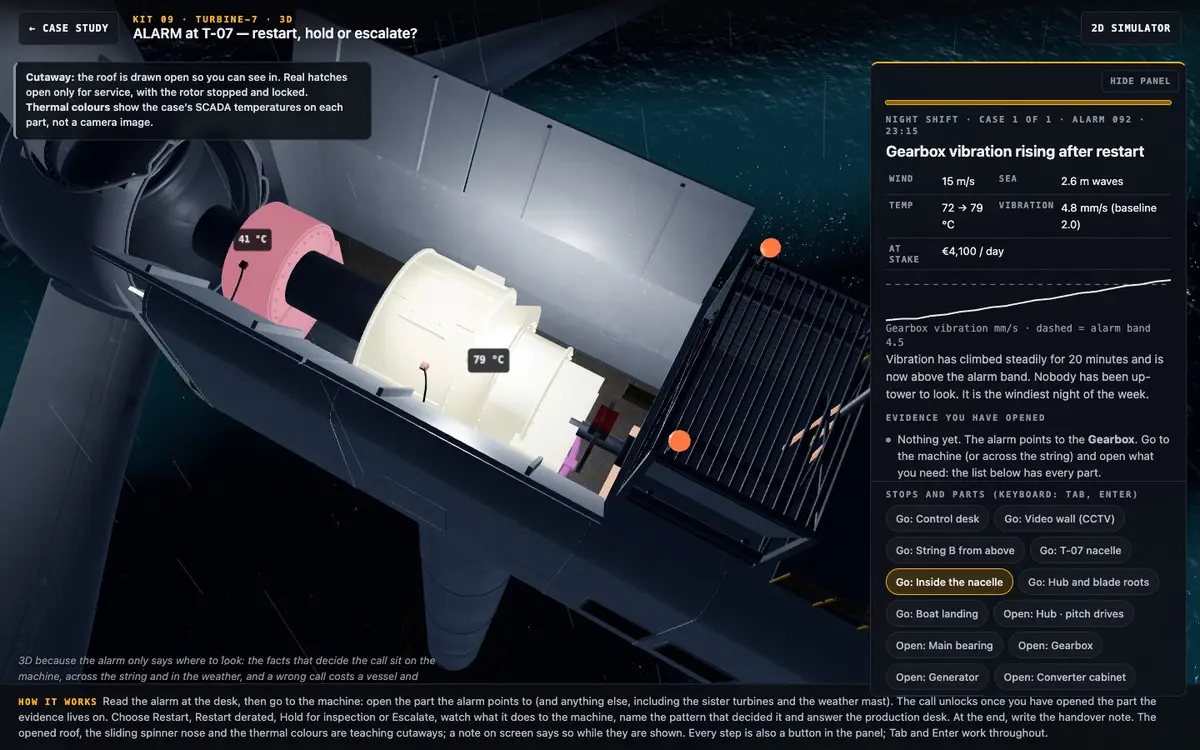
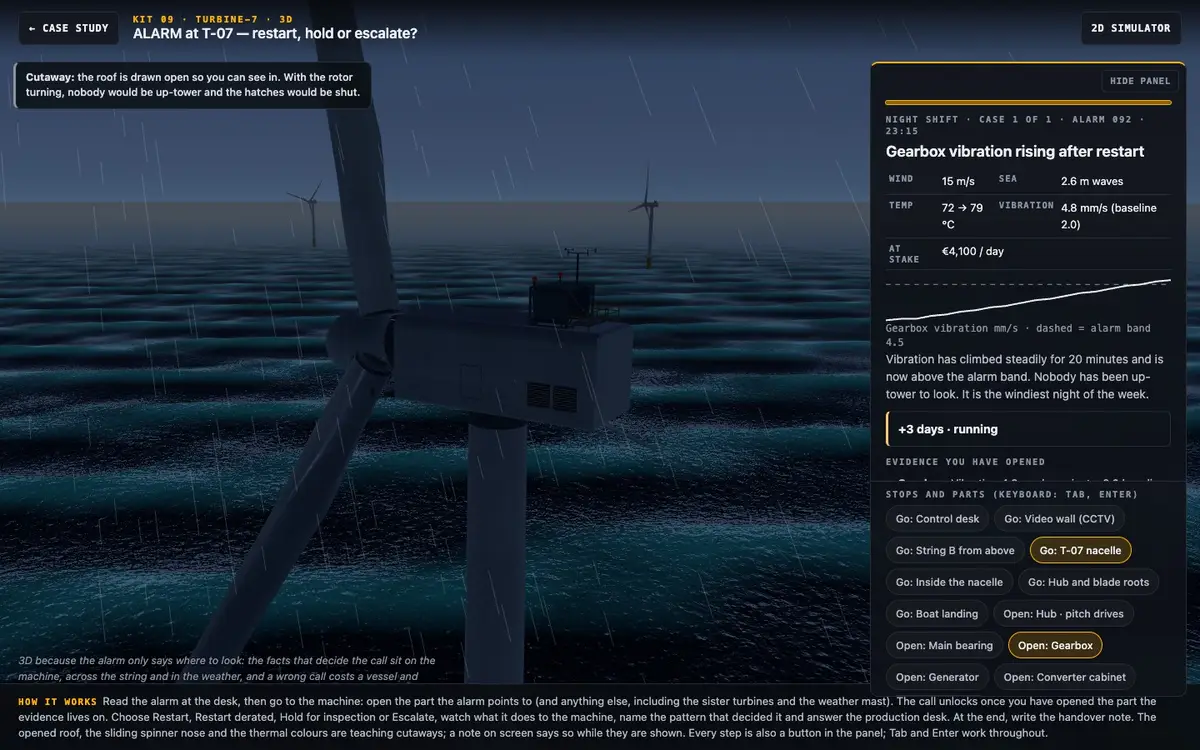
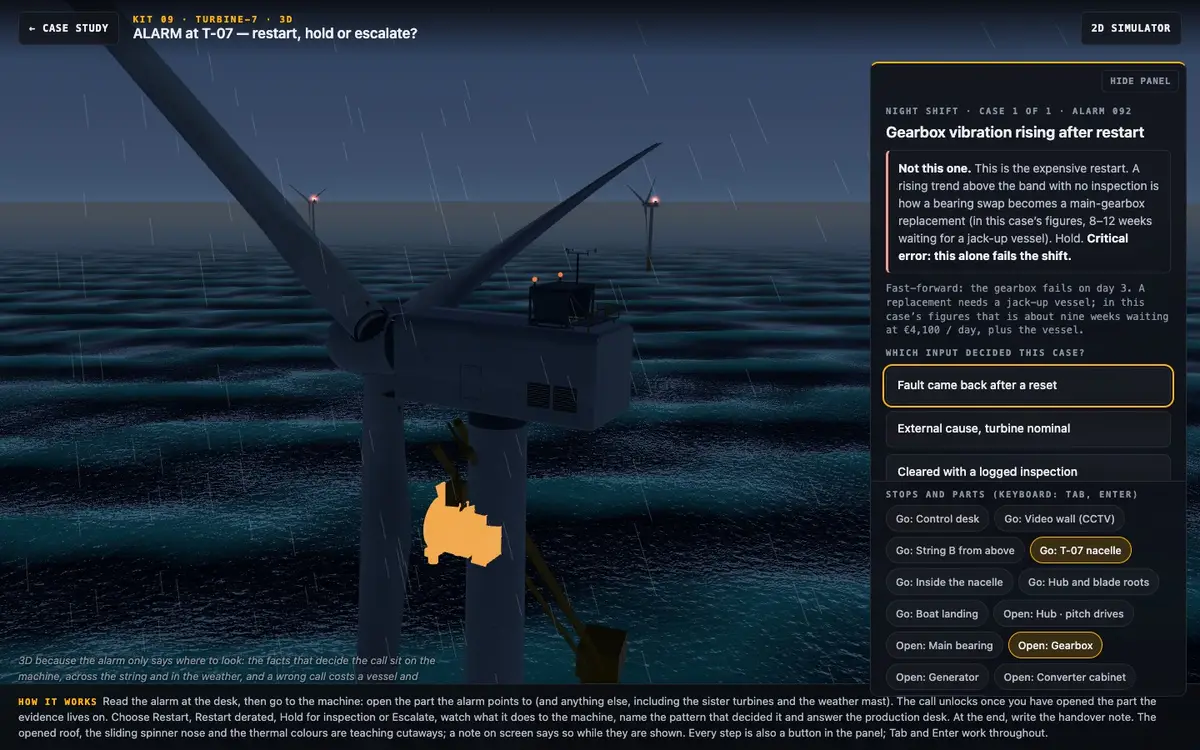
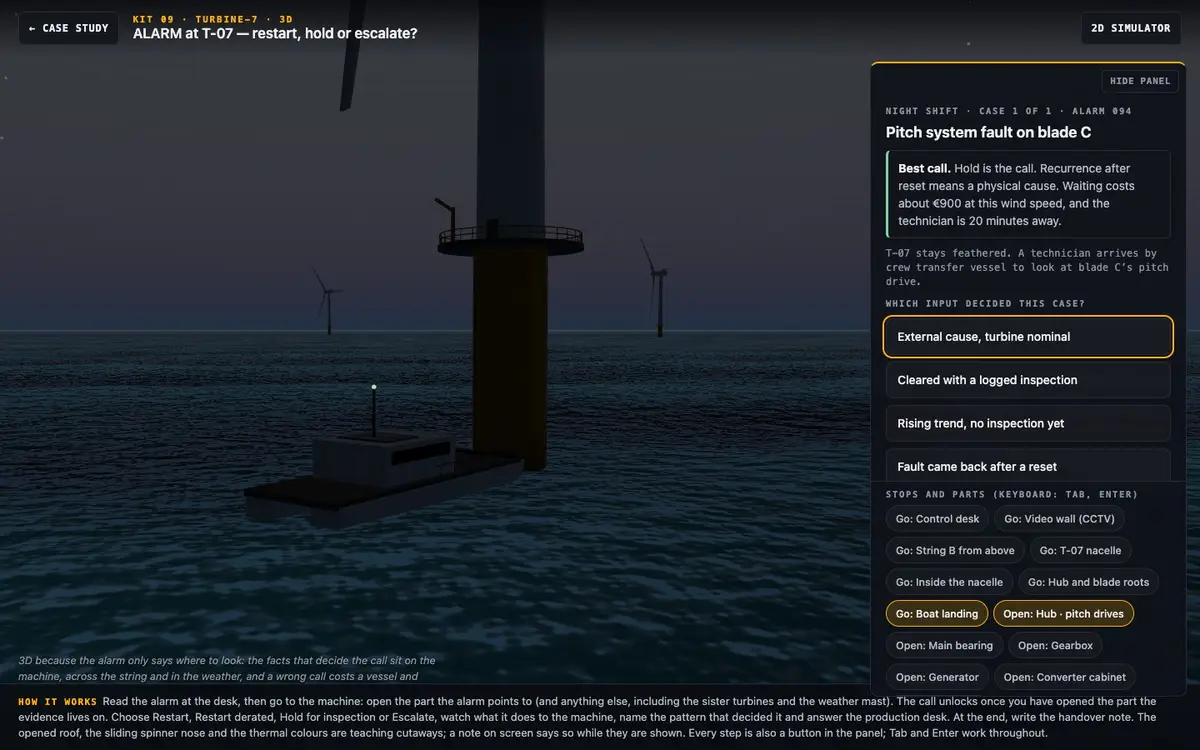
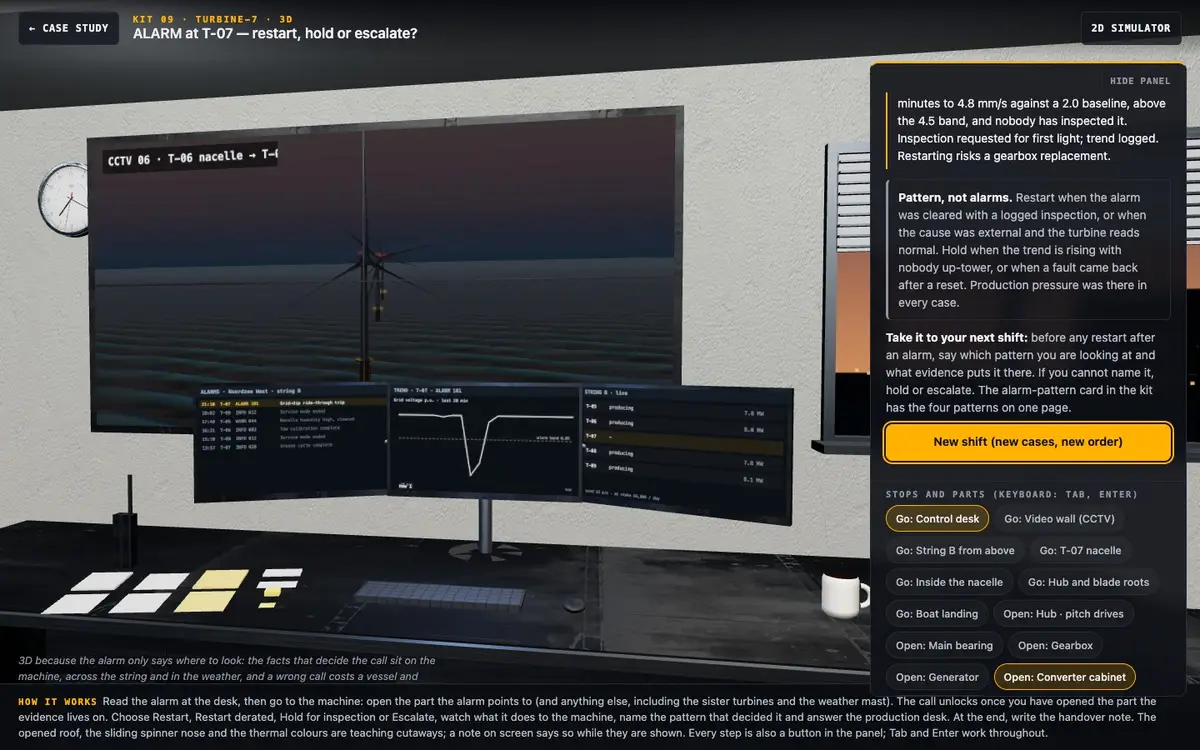
Case bank
| Pattern | Case | Where the evidence is | Best call | Critical error | Consequence in 3D |
|---|---|---|---|---|---|
| Cleared with a logged inspection | 087 generator bearing temperature | Inspection card on the generator | Restart | none | Returns to service with its sisters |
| 079 converter cooling flow | Work order on the converter cabinet | Restart | none | Returns to service | |
| Rising trend, no inspection yet | 092 gearbox vibration | Trend + no inspection on the gearbox | Hold | Restart, Restart derated | Restart: gearbox fails, jack-up lift. Hold: CTV at first light |
| 098 main-bearing temperature | Trend + grease log on the main bearing | Hold | Restart, Restart derated | Restart: bearing seizes, jack-up lift. Hold: CTV | |
| Fault came back after a reset | 094 blade C pitch fault | Pitch log + pitch mark on blade C | Hold | Restart | Restart: blade drifts, rotor trips. Hold: CTV |
| 105 yaw motor 3 overcurrent | Yaw log on the yaw drives | Hold | Restart | Restart: nacelle stops following the wind, trips. Hold: CTV | |
| External cause, turbine nominal | 101 grid-dip ride-through | Trip record on the converter + sister turbines | Restart | none | Rejoins the sisters; a hold loses €6,800/day |
| 110 storm cut-out | Met mast + sister turbines | Restart | none | Rejoins the sisters; a hold loses €7,400/day |
Production-desk pushback
| Reply type | Example (092) | Score | Feedback point |
|---|---|---|---|
| Data + risk + next step | "Vibration is at 4.8 against a 2.0 baseline and still climbing…" | 1 | The production desk can take that upward |
| Rule only | "Policy says I cannot restart above the alarm band." | 0 | Invites "then who can override it?" |
| Concede | "OK, I will restart and keep a close eye on it." | 0 | Undoes the safe call |
Scoring and pass rule
Each case: call 2 / 1 / 0, plus 1 for naming the pattern; the two pushback cases add 1. Maximum 14. Pass = 12 or more and no critical error. The handover note is scored 0–6 against its rubric and shown in the debrief; it does not change the pass.
Retry
"New shift" draws a new case from each pattern and a new order, so a retry tests whether the learner reads the evidence, not whether they remember the cases.
Prefer the source? Download the raw markdown.